



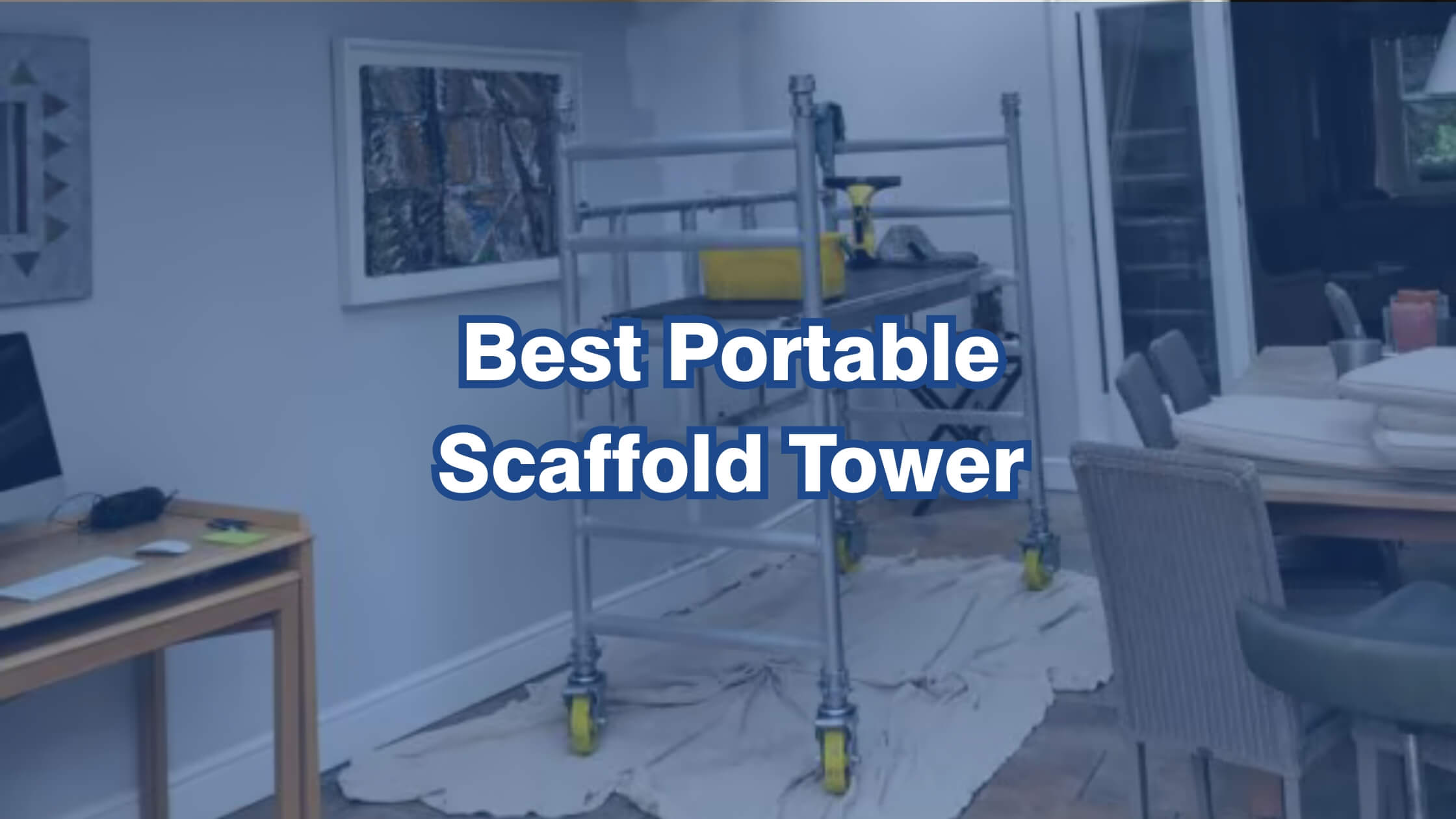
Working at height is one of those tasks where the margin for error is razor-thin. Whether you’re repointing brickwork, painting a stairwell, or replacing floodlights in a warehouse, the equipment beneath your feet matters more than almost anything else on site. A good portable scaffold tower gives you a stable, secure platform that you can move, adjust, and store without needing a forklift or a transit van the size of a small house. A bad one? That’s the kind of thing that ends careers, or worse. Having spent decades manufacturing aluminium towers at our London facility, we’ve seen every mistake, every bodge job, and every near-miss that comes from choosing the wrong kit. This guide is built from that experience. It’s here to help you pick the best portable scaffold tower for your specific job, your specific vehicle, and your specific budget, so you can get up, get the work done, and get home safely.
Selecting the Ideal Portable Scaffold Tower for Your Project
Choosing a tower isn’t like choosing a drill or a set of spanners. You can’t just grab whatever’s on offer and hope for the best. The right tower depends on a cluster of factors: how high you need to work, what you’re standing on, how much gear you’ll carry up with you, and how often you’ll need to move and reassemble it. Get any of those wrong and you’ll either be unsafe, inefficient, or both.
The best approach is to start with the job, not the product. What’s the maximum height you need to reach? Is the work indoors or outdoors? Will you be on concrete, tarmac, or uneven ground? How narrow are the access points? Once you’ve answered those questions honestly, the right tower tends to reveal itself.
Understanding Maximum Working Heights
Working height and platform height are two different numbers, and confusing them is one of the most common errors we see. Platform height is the actual height of the standing platform from the ground. Working height adds roughly two metres on top of that, accounting for the reach of an average person standing on the platform. So a tower with a 4-metre platform height gives you a working height of approximately 6 metres.
For most domestic and light commercial work, a working height of 4 to 7 metres covers the majority of tasks: gutters, fascias, first-floor windows, interior ceilings. Professional tradespeople working on commercial buildings or industrial facilities often need towers reaching 8 to 12 metres. LEWIS scaffold towers, for instance, are available in configurations from around 4 metres up to over 12 metres working height, all built from the same precision-engineered aluminium components.
One thing to remember: taller isn’t always better. Every additional metre of height adds weight, increases assembly time, and demands more stabilisation. If you only need 6 metres, don’t buy a tower rated for 10. You’ll spend more, carry more, and introduce complexity you don’t need.
Material Choices: Aluminium vs Steel
This one’s straightforward. For a portable tower, aluminium wins almost every time. It’s lighter, it doesn’t rust, and it’s strong enough for any standard scaffold tower application. A typical aluminium tower frame weighs roughly 40-60% less than its steel equivalent, which makes a massive difference when you’re loading and unloading from a van several times a day.
Steel towers still have their place in semi-permanent installations or heavy industrial settings where the tower stays in one location for weeks. But if portability is your priority, and it is if you’re reading this, aluminium is the only sensible choice. All LEWIS Access towers are manufactured from high-grade aluminium at our London production facility, and they’re designed to withstand years of daily professional use without corroding or losing structural integrity.
Platform Dimensions and Weight Capacities
Platform size determines how comfortably and safely you can work. The two standard widths you’ll encounter are narrow (around 0.7 metres) and standard (around 1.35 metres). Narrow platforms suit internal work in tight spaces: hallways, stairwells, between racking. Standard platforms give you room to move, store materials, and work alongside a colleague.
Weight capacity is equally critical. Most quality towers are rated to carry between 200 kg and 275 kg on the platform, including the weight of the people and all tools and materials. If you’re a plasterer carrying buckets of plaster up with you, or an electrician with a bag full of conduit, those kilograms add up fast. Always check the manufacturer’s rated load and never exceed it. That number isn’t a suggestion: it’s the line between a safe platform and a structural failure.
Key Portability Features and Transportability
A scaffold tower that’s brilliant to work on but impossible to move is just an expensive set of poles. True portability means the tower can be transported in a standard van, assembled quickly by one or two people, and repositioned on site without dismantling the entire structure. These features separate a genuinely portable tower from one that merely claims to be.
Locking Castors and Wheel Durability
Castors are the unsung heroes of any mobile tower. Good ones let you reposition the entire assembled tower across a flat surface with minimal effort. Bad ones stick, wobble, or fail to lock properly, and an unlocked castor on a tower with someone standing on it is a serious incident waiting to happen.
Look for castors with a positive locking mechanism, ideally one that locks both the wheel rotation and the swivel simultaneously. The castor housing should be heavy-duty steel or reinforced nylon, and the wheels themselves need to be rated for the total weight of the tower plus its maximum load. Cheap castors with plastic housings crack under sustained load, especially on rough surfaces like textured concrete or tarmac.
Check the diameter too. Larger wheels (150 mm or above) roll more smoothly over uneven ground and are less likely to catch on cables, hoses, or small debris. If you’re working outdoors regularly, this detail alone can save you significant frustration.
Folding Base Mechanisms for Quick Deployment
Some modern towers feature folding or telescopic base frames that reduce assembly time dramatically. Instead of connecting individual horizontal and diagonal braces at ground level, you unfold a pre-assembled base unit and lock it into position. This can cut setup time from 20-30 minutes down to under 10 for a basic configuration.
LEWIS Access towers are designed with a through-the-frame assembly method that’s both fast and intuitive. The frames interlock in a logical sequence, and because they’re compatible with SGB Boss components, tradespeople who’ve used Boss systems before will recognise the assembly pattern immediately. That compatibility is genuinely useful if you already own Boss components and want to extend or supplement your existing kit.
Compact Storage for Small Vans and Sheds
Here’s the reality for most tradespeople: you’re working out of a medium wheelbase van, and that van also needs to carry your tools, materials, dust sheets, and probably your lunch. A tower that packs down to a compact bundle is worth its weight in gold, or rather, worth its lack of weight in aluminium.
The best designs break down into flat-pack frames that stack neatly against a van wall. Platform decks should be slim enough to slide alongside the frames without eating into your cargo space. Some manufacturers offer purpose-built tower trolleys or carry bags, which keep components organised and prevent them from rattling around in transit.
Measure your van’s internal dimensions before you buy. Specifically, measure the distance between the wheel arches, because that’s usually the limiting factor. A tower with 2.5-metre frames won’t fit in a van with only 2.2 metres of usable internal length. It sounds obvious, but we’ve had more than a few customers discover this the hard way.
Safety Standards and UK Regulations
Working at height remains the single biggest cause of fatal and serious injuries in the UK construction industry. The Working at Height Regulations 2005 place a clear legal duty on employers and the self-employed to ensure that any equipment used for working at height is suitable, stable, and properly maintained. Choosing a tower that meets recognised standards isn’t optional: it’s a legal requirement.
Compliance with EN 1004 Standards
EN 1004 is the European standard that governs the design, manufacture, and use of mobile access towers. It specifies requirements for structural strength, stability, platform dimensions, guardrail heights, and maximum permissible loads. Any tower you buy for professional use should be fully compliant with EN 1004-1:2020, the most recent revision of the standard.
Compliance isn’t just a sticker on the box. It means the tower has been tested and certified to withstand specified loads and forces, that the guardrails are the correct height (a minimum of 950 mm), and that the platform has adequate toe boards to prevent tools and materials from falling. LEWIS Access towers are manufactured to meet and exceed EN 1004 requirements, and every tower leaves our London factory with full documentation confirming its compliance.
Be cautious of imported towers sold online at suspiciously low prices. Some of these products claim EN 1004 compliance but have never been independently tested. If a deal looks too good to be true, it probably is, and the consequences of a non-compliant tower failing aren’t something you want to gamble on.
Stabilisers and Outriggers for Lateral Support
Stabilisers and outriggers extend outward from the base of the tower to increase its effective footprint and resist tipping forces. They’re essential for taller towers and for any tower used outdoors where wind loading becomes a factor. EN 1004 specifies when stabilisers are required based on the height-to-base ratio of the tower.
As a general rule, if your tower’s platform height exceeds three times the minimum base dimension, you need stabilisers. So a tower with a 1.3-metre-wide base would need stabilisers once the platform height exceeds roughly 3.9 metres. Outdoors, the requirements are even stricter because wind can exert significant lateral force on the tower and anyone standing on it.
Good stabilisers are adjustable for uneven ground and lock positively into the tower frame without relying on friction alone. They should be easy to fit and remove, because you’ll be doing it every time you set up and break down.
Integral Ladder Systems and Guardrails
How you get onto the platform matters just as much as the platform itself. Internal ladder systems, where the climbing rungs are inside the tower footprint, are far safer than external ladders because your weight stays within the base area during the climb. This reduces the tipping risk significantly.
Guardrails on all four sides of the platform are non-negotiable for any tower over 2 metres in platform height. The rails should be at least 950 mm high, with an intermediate rail at roughly half that height. Toe boards along the platform edge prevent dropped objects, which is both a safety issue and a practical one: nobody wants to climb down to retrieve a fallen spirit level for the third time in an hour.
Some towers offer trapdoor platforms, where a hinged section of the deck opens to allow access from below and then closes to create a full, uninterrupted working surface. This is the gold standard for safe access because it means you never have to step outside the guardrails during the climb.
Best Portable Towers for Different Use Cases
Not every job demands the same tower. A homeowner replacing a section of soffit has very different needs from an electrical contractor rewiring a distribution warehouse. Matching the tower to the task isn’t just about efficiency: it’s about safety, cost, and practicality.
Top Picks for Domestic Maintenance and DIY
For home maintenance tasks like painting, gutter cleaning, and minor roof repairs, a tower with a working height of 4 to 6 metres is usually sufficient. You want something light enough for one person to handle, quick to assemble, and compact enough to store in a garage or shed between uses.
A single-width aluminium tower with folding frames hits the sweet spot here. Look for:
- Working height of 4-6 metres
- Total weight under 60 kg for easy handling
- Platform width of at least 0.6 metres
- Locking castors for repositioning on patios and driveways
- Full guardrail system with toe boards
These towers are also excellent for property landlords and facilities managers who need a reliable, reusable solution for routine maintenance across multiple sites.
Heavy-Duty Options for Professional Tradespeople
Professional users need towers that can handle daily setup and teardown without wearing out. That means heavier-gauge aluminium, reinforced locking mechanisms, and components rated for higher loads. A platform capacity of 275 kg is standard for professional-grade towers, allowing two workers plus tools and materials.
LEWIS Access towers are built specifically for this market. Every component is manufactured in our London facility using aircraft-grade aluminium, and the towers carry over 3,000 five-star reviews from professional users across the UK. We deliver nationwide using our own fleet of HGVs, which means your tower arrives on our terms, not a third-party courier’s.
For tradespeople already using SGB Boss or Youngman Boss systems, LEWIS towers offer full compatibility. You can integrate LEWIS frames and platforms with existing Boss components, which means you don’t have to replace everything at once. That’s a significant cost saving for businesses building their equipment inventory over time.
Narrow-Width Towers for Internal Hallways
Internal work in domestic properties often means dealing with hallways as narrow as 800 mm. Standard-width towers simply won’t fit. Narrow towers, sometimes called stairwell towers or slim towers, have a base width of around 700 mm, allowing them to pass through standard doorways and fit within confined corridors.
These towers sacrifice some platform space for access, so they’re best suited to single-person tasks: painting, running cables, fitting smoke detectors, or accessing loft hatches. Despite their slim profile, a well-designed narrow tower still provides full guardrail protection and a stable working platform. Just pay extra attention to stabilisers on narrow towers, because the reduced base width means the tipping threshold is lower.
Assembly Tips and Maintenance for Longevity
A quality scaffold tower should last a decade or more with proper care. Aluminium doesn’t rust, but it’s not indestructible. Bent frames, worn locking pins, and damaged castors all compromise safety. A few simple habits will keep your tower in reliable working condition for years.
Pre-Use Inspection Checklists
Every time you assemble a tower, inspect it before anyone steps onto the platform. This isn’t bureaucracy: it’s the law under the Work at Height Regulations, and it takes less than five minutes.
Run through these checks each time:
- Inspect all frames for bends, cracks, or dents, especially at connection points
- Check that locking clips and spring pins engage fully and positively
- Confirm all four castors lock securely in both wheel and swivel
- Verify that guardrails are fitted on all sides and at the correct height
- Ensure the platform deck sits flat and is fully engaged with the frame
- Check stabilisers are correctly positioned and adjusted for ground conditions
- Confirm the ground surface is firm, level, and capable of supporting the tower’s total load
If any component fails inspection, don’t use the tower until it’s been repaired or replaced. A single bent brace or a castor that won’t lock is enough to make the entire structure unsafe.
Cleaning and Storing Your Mobile Tower
After each use, knock off any plaster, paint, or mortar from the frames before it hardens. Dried-on material can interfere with frame connections and locking mechanisms on the next assembly. A stiff brush and a bucket of water handle most residue. For stubborn deposits, a plastic scraper works without damaging the aluminium surface.
Store your tower components in a dry location, ideally off the ground on racking or a purpose-built trolley. While aluminium resists corrosion far better than steel, prolonged contact with damp concrete or standing water can cause surface oxidation over time. Keep locking pins and spring clips lightly oiled with a silicone-based lubricant to maintain smooth operation.
Label your components if you own multiple towers or tower configurations. Nothing wastes time like sorting through a pile of mixed frames trying to work out which ones belong together. A simple colour-coded tape system on each frame set solves this problem permanently.
Choosing with Confidence
The right portable scaffold tower is the one that fits your work, fits your van, and keeps you safe every single time you use it. Height, width, weight capacity, and compliance with EN 1004 are the non-negotiable factors. Everything else, from folding bases to compatible components, is about making your working life easier and more efficient.
As a family-owned manufacturer with decades of experience building towers in London, we’ve designed every LEWIS Access product around one principle: the person standing on the platform needs to trust it completely. That trust comes from quality materials, precise engineering, and rigorous testing, not from marketing claims.
If you’re unsure which tower suits your needs, talk to us. Our team can recommend the right configuration based on your specific working heights, site conditions, and vehicle size. With UK-wide delivery on our own HGVs and full compatibility with SGB Boss systems, getting the right tower to your door is simpler than you might expect.