



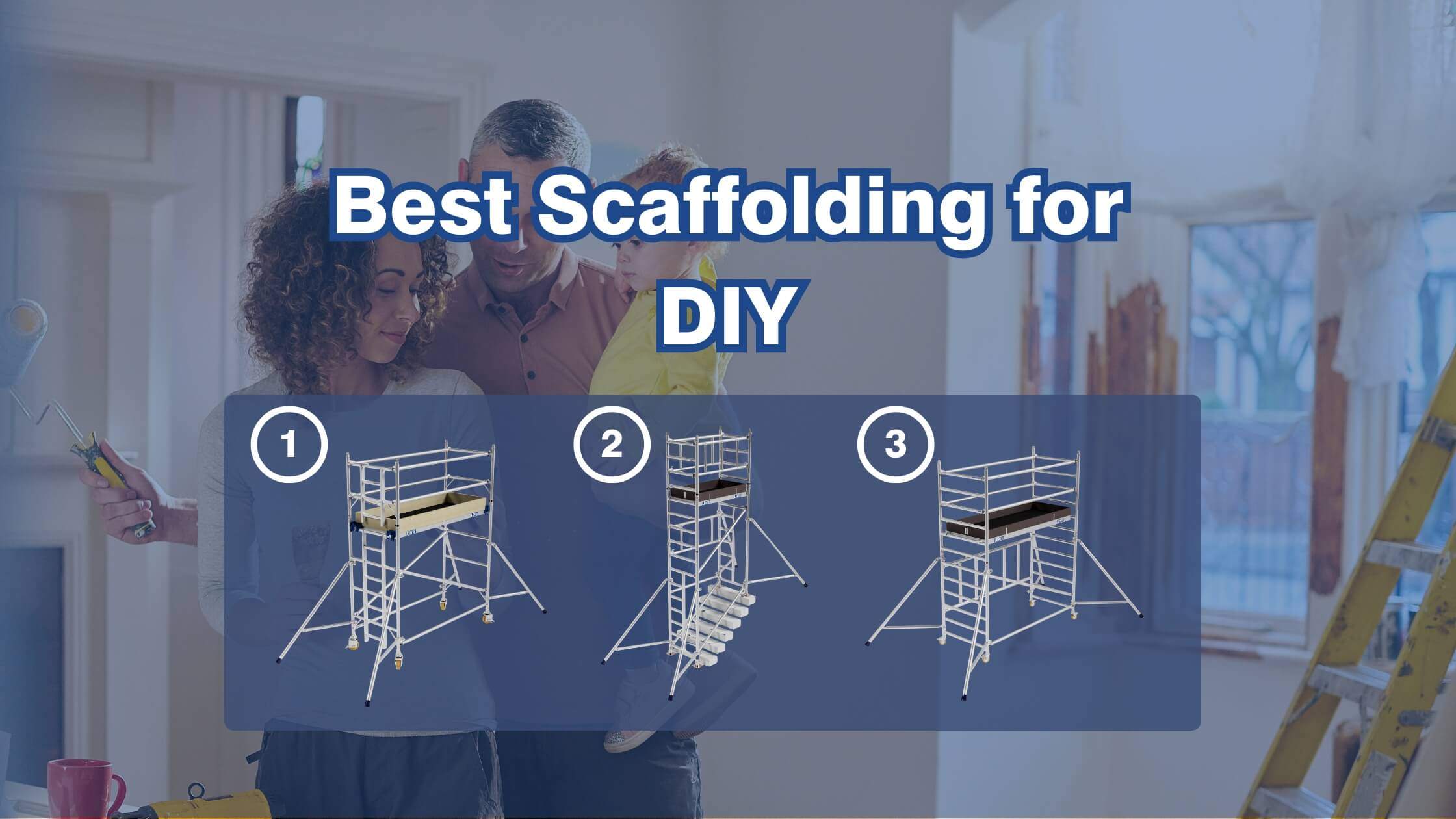
Choosing the right scaffolding for a home project can mean the difference between a job done well and a trip to A&E.
Whether you’re repainting a gable end, repointing brickwork, or tackling an interior renovation, the platform you stand on matters more than most people realise.
A wobbly ladder propped against a wall might feel like the quick option, but it’s never the safe one.
The best scaffolding for DIY work gives you a stable, level surface at height, with room to move, space for your tools, and guardrails to keep you from falling.
That’s not a luxury: it’s the bare minimum for anyone working above ground level.
Getting this decision right saves time, prevents injuries, and often pays for itself in the quality of work you produce. So before you commit to a system, here’s what you need to know about the options available, the safety standards that apply, and which type of scaffold tower or platform suits your particular project.
Selecting the Right Scaffolding for Home Projects
Not all scaffolding is created equal, and not every project demands the same setup. A single-storey fascia repair is a completely different proposition from an internal stairwell decoration or a full exterior render. The first step is honest assessment: what exactly are you doing, how high do you need to reach, and where is the work located?
Evaluating Project Height and Reach Requirements
Height is the obvious starting point. Measure the highest point you need to reach, then add roughly a metre for comfortable working. If you’re painting a ceiling at 2.4 metres, you need a platform at around 1.4 metres, not the full ceiling height. For external work on a two-storey house, you’re looking at platform heights of 4 to 6 metres, which puts you firmly into tower scaffold territory.
Reach matters just as much. A narrow tower gives you access to a vertical strip of wall, but you’ll be constantly climbing down and repositioning for wider surfaces. Think about the horizontal spread of your work area. If you’re rendering an entire wall, you either need a longer platform or you need a mobile tower you can wheel along the elevation. LEWIS Access manufacture aluminium scaffold towers with platform lengths up to 2.5 metres, which covers most domestic scenarios without constant repositioning.
Don’t forget overhead clearance either. If you’re working inside, ceiling height limits what you can erect. A folding scaffold or low-level platform might be all you can fit in a room with standard 2.4-metre ceilings.
Internal vs External DIY Scaffolding Needs
External work typically requires taller towers, outriggers for stability, and components rated for wind loading. You’re also dealing with uneven ground: driveways, garden paths, sloped lawns. Adjustable legs become essential rather than optional.
Internal work has different challenges. You need something that fits through doorways, doesn’t scratch floors, and can be assembled in confined spaces. Narrow-width towers (around 0.7 metres wide) are purpose-built for this. Stairwells present their own headache entirely, which we’ll get to shortly.
The environment dictates the equipment. An exterior tower needs locking castors and stabilisers. An interior platform needs non-marking wheels and a compact footprint. Get this wrong and you’ll either damage your home or compromise your safety.
Top Types of DIY Scaffolding Systems
The market offers several distinct categories, each designed for specific working conditions. Understanding what each type does well, and where it falls short, prevents expensive mistakes.
Mobile Tower Scaffolds for Versatility
Mobile tower scaffolds are the workhorse of DIY scaffolding. They consist of aluminium frames that slot together, braced with diagonal members, topped with a full platform and guardrails. Lockable castors on the base let you wheel the assembled tower into position, then lock it solid while you work.
For most homeowners tackling exterior projects, a mobile tower between 4 and 6 metres platform height covers the majority of tasks. These towers are available in single-width (around 0.85 metres) and double-width (around 1.45 metres) configurations. Double-width gives you more room to work and better stability, but single-width fits through standard doorways.
LEWIS scaffold towers, manufactured in London, use a through-the-trapdoor climbing method, which means you ascend through the platform rather than climbing the outside of the tower. This is a critical safety feature: it keeps you inside the guardrails at all times. Their towers are also compatible with SGB Boss components, which is useful if you already own some fittings or can source them secondhand.
A good mobile tower is the single most versatile piece of access equipment a DIYer can own. It handles painting, rendering, gutter work, window replacement, and roof-edge repairs.
Folding Scaffolds for Low-Level Maintenance
Not every job needs a full tower. For work below 2 metres, a folding scaffold or mini tower is often the smarter choice. These are lightweight aluminium frames that fold flat for storage, open out to create a stable platform at around 0.7 to 1.2 metres height, and typically weigh under 20 kilograms.
They’re perfect for interior painting, wallpapering, fitting light fixtures, or any repetitive task where you need to be slightly above floor level for extended periods. Compared to stepladders, they give you a much larger standing area and free up both hands for working.
The trade-off is obvious: limited height. If your project goes above about 2.5 metres reach height, you need something taller. But for the tasks they’re designed for, folding scaffolds are brilliant. They set up in seconds, store in a cupboard, and cost a fraction of a full tower system.
Stairwell Scaffolding for Difficult Access
Stairwells are the bane of every decorator’s existence. The floor is at multiple levels, the walls are at awkward angles, and conventional towers won’t work because there’s no flat surface to stand them on.
Stairwell scaffolds solve this with adjustable-height legs that accommodate the stair treads, creating a level platform across the void. Some systems use a combination of frames and extension legs, while others employ purpose-built stairwell packs that integrate with standard tower components.
This is one area where buying the right equipment matters enormously. Bodging a solution with planks across stepladders is genuinely dangerous: people fall from stairwells every year doing exactly that. A proper stairwell kit from a reputable manufacturer like LEWIS Access or Youngman Boss gives you a guardrailed platform at the correct height, properly supported and stable.
If you only need stairwell access once, hiring makes more sense than buying. But if you’re a serial renovator, owning a stairwell pack saves money over multiple projects.
Podium Steps and Work Platforms
Podium steps sit between stepladders and scaffold towers. They’re essentially a small platform on a wheeled base, with guardrails around the top. Working heights typically range from 1.5 to 3 metres, and they’re designed for quick tasks: changing bulbs in commercial spaces, light maintenance, stock picking, and similar.
For DIY use, podium steps work well for jobs where you need to move frequently and don’t want the setup time of a full tower. They’re popular for painting large rooms, fitting kitchen cabinets, and any task where you’re constantly shifting position.
The guardrails are what set them apart from stepladders. Under the Work at Height Regulations 2005 (still fully in force in 2026), any work platform should prevent falls where reasonably practicable. Podium steps achieve this with a simple, enclosed working area.
Essential Safety Features and UK Regulations
Safety isn’t optional. The Health and Safety Executive takes falls from height seriously because they remain one of the leading causes of workplace death and serious injury in the UK. Even domestic projects carry real risk.
Guardrails and Toe Boards
Every scaffold platform above 2 metres should have guardrails at a minimum height of 950 millimetres and toe boards at least 150 millimetres high. Guardrails prevent you from stepping off the edge. Toe boards prevent tools and materials from sliding off and hitting someone below.
These aren’t suggestions. They’re requirements under BS EN 1004 for mobile access towers. When you’re buying or hiring a scaffold tower, check that the system includes:
- A main guardrail at the correct height
- An intermediate guardrail (mid-rail) to close the gap
- Toe boards on all open sides
- A trapdoor platform for safe access
If a system doesn’t include all four, it doesn’t meet the standard. Walk away.
Outriggers and Stabilisers for Balance
Outriggers are the diagonal braces that extend from the base of a tower to widen its footprint. They’re essential for taller towers where the height-to-base ratio exceeds safe limits. The general rule is that the base dimension (including outriggers) should be at least a quarter of the tower height for outdoor use, and a third for indoor use without outriggers.
Stabilisers serve a similar purpose but attach higher up the tower, tying it to the building or extending the effective base. For external domestic work, outriggers are almost always necessary once you exceed about 4 metres platform height.
Check that outriggers are included with any tower you purchase. Some budget systems sell them as optional extras, which is a false economy. You need them.
Weight Capacities and Load Classes
Scaffold towers are rated by load class under EN 1004. The classes most relevant to DIY are:
- Class 2: 150 kg/m² (light duty, suitable for inspection and light work)
- Class 3: 200 kg/m² (general purpose, suitable for most DIY tasks)
That load includes you, your tools, and your materials. A 90-kilogram person carrying a bucket of render and a trowel is already at 110 kilograms before accounting for any stacked materials on the platform. Always check the manufacturer’s stated maximum load and stay well within it.
LEWIS Access towers are rated to Class 3 as standard, which gives comfortable headroom for typical domestic projects. Don’t assume all towers carry the same rating: cheaper imports sometimes meet only Class 2 or lack proper certification entirely.
Material Choices: Aluminium vs Steel
The frame material affects weight, durability, cost, and practicality. For DIY scaffolding, the choice almost always comes down to aluminium or galvanised steel.
Benefits of Lightweight Aluminium Frames
Aluminium is the dominant material for DIY scaffold towers, and for good reason. A typical aluminium tower frame weighs 30 to 50 percent less than its steel equivalent. That weight difference matters enormously when you’re assembling and dismantling a tower alone or with one helper.
Aluminium doesn’t rust. Leave it in the rain, store it in a damp garage, use it for years: it won’t corrode. This makes it ideal for homeowners who might use their tower a few times a year and store it the rest of the time.
The strength-to-weight ratio of modern aluminium alloy (typically 6082-T6 for scaffold towers) is excellent. LEWIS Access have been manufacturing aluminium towers in London for two decades, and their frames demonstrate that lightweight doesn’t mean flimsy. The alloy is strong enough for Class 3 loading while remaining manageable for a single person to lift individual components.
Durability and Strength of Galvanised Steel
Steel scaffolding is heavier, stronger in absolute terms, and cheaper per component. Traditional tube-and-fitting scaffolding used on construction sites is almost always steel, and it handles enormous loads across long spans.
For DIY, steel has limited appeal. The weight makes it impractical for one or two people to erect. It rusts if the galvanising is damaged. It’s harder to transport and store. The main scenario where steel makes sense for a homeowner is when you need a very large, semi-permanent structure: perhaps for a major renovation lasting months.
For anything portable, aluminium wins. The ease of handling alone justifies the price difference.
Assembly and Maintenance Tips for Homeowners
Owning scaffolding is only useful if you can put it up correctly and keep it in safe condition. These aren’t complicated tasks, but they require attention.
Pre-Use Inspection Checklist
Before every use, inspect your tower. This takes five minutes and could save your life.
- Check all frame sections for dents, cracks, or bent members
- Inspect locking mechanisms on braces and platform hatches
- Confirm castors spin freely and lock firmly
- Verify that all clips, spigots, and connection points are undamaged
- Look for corrosion on steel components or fatigue cracks on aluminium joints
If anything fails inspection, don’t use it. Replacement parts are available from manufacturers: a new brace costs far less than a hospital stay.
Levelling Scaffolding on Uneven Ground
Uneven ground is the most common setup problem for domestic scaffolding. Driveways slope. Lawns are bumpy. Patio slabs settle unevenly over time.
Adjustable legs (sometimes called screw jacks) are the correct solution. These thread into the base of each tower leg and allow you to level the tower by extending individual legs. Use a spirit level on the platform to confirm it’s true.
Never use bricks, blocks, or timber offcuts to level a tower. They can shift, crack, or compress under load. Adjustable legs are engineered for the purpose and rated for the weight. If your tower didn’t come with them, order them from the manufacturer before you start work.
On soft ground like lawns, use base plates or sole boards to spread the load and prevent the legs from sinking. A 450mm square plywood board under each leg works well.
Compact Storage Solutions for DIYers
One advantage of aluminium scaffold towers is that they dismantle into flat-pack components. A full 6-metre tower breaks down into frames, braces, and platforms that stack against a garage wall or fit in a garden shed.
Store components vertically where possible to save floor space. Keep small fittings (clips, pins, castor locks) in a labelled container so they don’t go missing between uses. Wipe down aluminium frames after use in wet conditions: while aluminium doesn’t rust, dirt and debris can cause surface pitting over time.
If space is genuinely tight, folding scaffolds and mini towers collapse to remarkably small dimensions. Some models fold to just 150 millimetres thick.
Hiring vs Buying Scaffolding for DIY
This is the question every homeowner faces, and the honest answer depends on how often you’ll use it.
Hiring a scaffold tower for a week typically costs between £80 and £200, depending on height and configuration. That’s reasonable for a one-off project. But if you’re the type who tackles two or three projects a year, those hire costs add up fast. Within two to three years, you’ve spent more on hire fees than the purchase price of a quality tower.
Buying makes sense if you’ll use the tower regularly, if you want the convenience of having it available whenever you need it, and if you have somewhere to store it. A LEWIS Access aluminium tower, with its compatibility with SGB Boss fittings and its Class 3 load rating, represents a long-term investment. These towers last decades with basic care, and their resale value holds well because aluminium doesn’t degrade.
Hiring makes sense for one-off projects, for very tall towers you’d rarely need, or for specialist configurations like stairwell kits that you might only use once.
There’s a middle path too. Buy a standard tower that covers 80 percent of your needs, and hire specialist components (stairwell packs, extra-height extensions) for the occasional unusual job. This gives you the best balance of cost, convenience, and capability.
So, what’s the best scaffolding for DIY then?
Whatever you decide, don’t compromise on quality. A cheap tower that flexes, wobbles, or lacks proper guardrails isn’t a bargain. It’s a liability. Buy from established manufacturers with proper EN 1004 certification, or hire from reputable suppliers who maintain their equipment to standard. Your safety at height depends on the quality of what you’re standing on. Choose accordingly.