



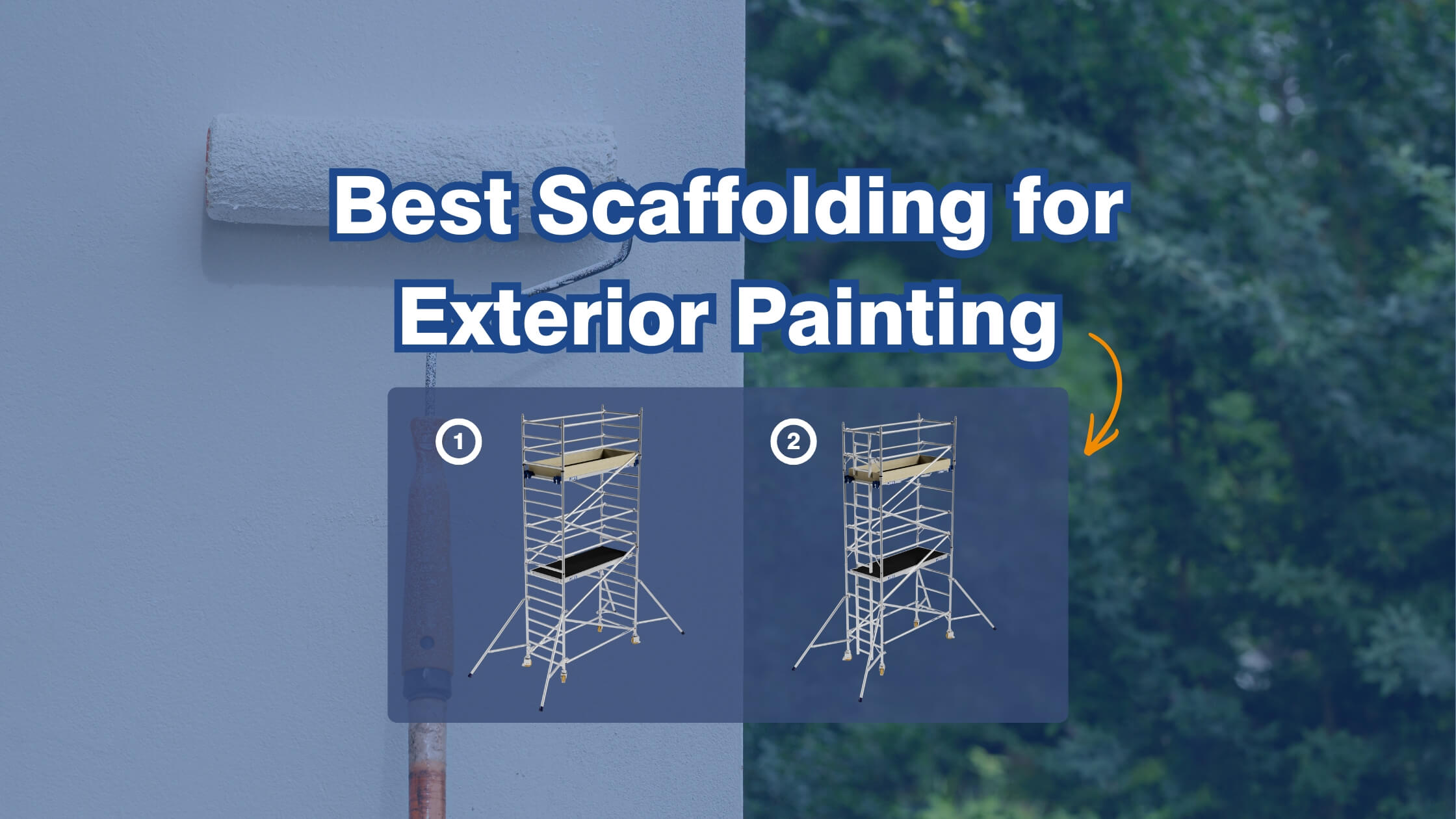
Painting the outside of a building is one of those jobs that looks straightforward until you’re three metres up on a wobbly ladder, one hand gripping a fascia board, the other trying to control a roller.
The truth is, exterior painting demands stable, level access across wide areas, often at varying heights, and for extended periods.
A ladder simply won’t cut it for most jobs.
What you need is the right scaffolding: something that gives you a proper working platform, keeps your tools within reach, and lets you focus on getting a clean finish rather than worrying about your footing.
Choosing the best scaffolding for exterior painting depends on the building, the height, the surface complexity, and how long the job will take.
Whether you’re a sole trader refreshing a terrace of houses or a maintenance team recoating a commercial facade, the scaffold you pick will directly affect your speed, your safety, and the quality of your work.
This guide breaks down every option worth considering, from mobile towers to fixed systems, materials to safety features, and the honest trade-offs between hiring and buying.
Essential scaffolding types for exterior painting projects
The type of scaffolding you choose sets the tone for the entire job. Get it right and you’ll move efficiently along the building, reaching every section without constantly repositioning. Get it wrong, and you’ll waste hours on setup, risk working in awkward positions, and possibly compromise safety.
Three main categories cover the vast majority of exterior painting work: mobile tower scaffolds, fixed tube and fitting systems, and modular system scaffolding. Each has a distinct set of strengths, and the best choice depends on the scale and complexity of the project.
Mobile tower scaffolding for flexibility
For most tradespeople painting residential exteriors, a mobile aluminium scaffold tower is the workhorse. These towers are freestanding, quick to assemble, and can be wheeled into position along a wall without dismantling anything. If you’re painting a two-storey house, a tower with a platform height of around 4 to 6 metres gives you comfortable access to gutters, soffits, and upper-floor window frames.
The real advantage is repositioning. You finish one section, lock the castors, lower or raise the platform, and roll to the next. Compare that with a fixed scaffold that stays put for the duration, and the time savings on a straightforward facade are significant.
LEWIS scaffold towers, manufactured in London, are a popular choice among painters and decorators precisely for this reason. Their aluminium construction keeps the weight manageable for a two-person team, and compatibility with SGB Boss and Youngman Boss components means you can extend or adapt the tower with parts you may already own.
One thing to watch: mobile towers need firm, level ground. If you’re working on a sloped driveway or soft garden soil, you’ll need base plates or height-adjustable legs to get the tower plumb (these come as standard with an industrial mobile scaffold with LEWIS). Skipping this step is where accidents happen.
Fixed tube and fitting scaffolds for complex facades
Some buildings don’t play nicely with mobile towers. Victorian properties with bay windows, buildings with multiple setbacks, or facades with protruding features like porches and chimney stacks often require a bespoke scaffold structure. That’s where traditional tube and fitting scaffolding comes in.
A scaffolder builds the structure on site using steel or aluminium tubes, couplers, and boards, tailoring every section to the building’s geometry. For a painter, this means a continuous working platform that follows the contours of the facade, with returns around corners and loading bays for materials.
The downside is cost and time. You’ll need a qualified scaffolder to erect and dismantle the structure, and the hire period for a full fixed scaffold can run into weeks. For a large commercial repaint or a heritage restoration project, though, the investment pays for itself in productivity and safety.
Fixed scaffolds also allow for sheeting or netting, which is useful if you’re working on a building adjacent to a public footpath and need to contain paint spray or debris.
System scaffolding for rapid assembly
System scaffolding sits between mobile towers and traditional tube and fitting. It uses prefabricated components: vertical standards with built-in connection points, horizontal ledgers, and platform decks that click or wedge into place. Think of it as a giant construction kit designed for speed.
For painting contractors handling medium-scale projects, like a row of commercial units or a school building, system scaffolding offers a good balance. Assembly is faster than tube and fitting because the components are standardised, and the structure can be configured to suit different building shapes.
The trade-off is flexibility. System scaffolding works brilliantly for regular, predictable facades but struggles with highly irregular surfaces. If the building has unusual features, you may still need some tube and fitting sections to fill gaps.
Choosing the right material for painting platforms
The material your scaffold is made from affects everything: how easily you can move it, how long it lasts, and whether it’s safe for your specific working environment.
Lightweight aluminium vs heavy-duty steel
Aluminium is the dominant material for mobile scaffold towers, and for good reason. A typical aluminium tower weighs 40 to 60 percent less than a comparable steel structure, which makes a real difference when you’re loading components onto a van, carrying frames through a side passage, or assembling on site without a crane.
For exterior painting, where you’re frequently repositioning the scaffold, aluminium’s weight advantage is hard to overstate. A two-person team can comfortably move a LEWIS aluminium tower along a building without mechanical assistance. Try that with a steel tower of the same height, and you’ll understand the difference quickly.
Steel still has its place. For long-term fixed scaffolds on large projects, steel’s higher load capacity and rigidity make it the preferred choice. It handles heavy equipment, multiple operatives, and sustained wind loads better than aluminium. But for the typical painting job, where the platform supports one or two painters plus buckets and rollers, aluminium is more than adequate.
Corrosion is another consideration. Aluminium naturally forms a protective oxide layer, so it handles rain and damp conditions well without additional treatment. Steel scaffolding, unless galvanised, will rust over time, particularly if stored outdoors between jobs.
Fibreglass options for electrical safety
If you’re painting near overhead power lines, electrical substations, or any building with external wiring, fibreglass scaffolding deserves serious consideration. Fibreglass is non-conductive, which eliminates the risk of the scaffold becoming a path to earth if it contacts a live cable.
This isn’t a niche concern. Plenty of residential and commercial buildings have overhead service cables running close to the facade. The Health and Safety Executive has documented multiple incidents involving scaffold contact with power lines, and the consequences are severe.
Fibreglass towers are heavier than aluminium and more expensive, so they’re not the default choice for every job. But if your risk assessment identifies electrical hazards, the additional cost is a straightforward safety investment.
Key features for painter productivity and safety
A scaffold tower is more than a platform at height. The features built into the design determine how efficiently and safely you can work, particularly on painting jobs that involve long hours in the same position.
Adjustable platform heights and levelling legs
Exterior painting rarely involves working at a single height. You might start at the eaves, move down to the window frames, then drop to the ground-floor render. A scaffold with easily adjustable platform heights lets you reposition the working deck without dismantling and rebuilding the tower.
LEWIS scaffold towers use an interlock system that allows platform height adjustments in set increments, so you can match the deck to the section you’re painting, especially with the 8-rung industrial scaffold tower model, because the spacing between each rung is 250mm rather than 500mm with the 3T Industrial. This matters because reaching too far above or below your natural working height leads to fatigue, poor brush control, and back strain.
Levelling legs are equally important. British driveways, pavements, and garden paths are rarely perfectly flat. Adjustable legs with screw jacks let you compensate for uneven ground, keeping the tower plumb and the platform level. Always check the spirit level before climbing, every single time you reposition.
Integrated guardrails and toe boards
The Work at Height Regulations 2005 require edge protection on any scaffold platform where a person could fall. For painting, this means guardrails at the correct height and toe boards to prevent tools, tins, and rollers from sliding off the platform edge.
Look for towers with guardrails that are integral to the frame design rather than bolted on as afterthoughts. Integral guardrails are quicker to install and less likely to be left off by a rushed operative. Toe boards should be at least 150mm high and fitted on all open sides.
A dropped paint tin from 5 metres doesn’t just make a mess. It can seriously injure someone below. Toe boards are a simple, non-negotiable safety feature.
Non-slip walk boards and weather protection
Exterior painting means working in British weather, which means dew, drizzle, and the occasional downpour. Platform decks need a non-slip surface that maintains grip when wet. Aluminium platforms with punched or embossed surfaces perform well here, as do timber boards with anti-slip strips.
Some painters fit temporary weather sheeting to one side of the scaffold to create a sheltered working area. This can extend your productive hours on days when light rain would otherwise stop work. Just be aware that sheeting increases wind loading on the scaffold, so check the manufacturer’s guidance on maximum sheeted heights and wind speed limits.
Keep platforms clear of paint spills, which create slip hazards even on textured surfaces. A quick wipe-down at the end of each session takes thirty seconds and could prevent a serious fall.
Scaffolding alternatives for smaller exterior jobs
Not every painting job needs a full scaffold tower. For single-storey work, spot repairs, or quick touch-ups, lighter access equipment can be faster to deploy and more practical.
Podium steps and low-level work platforms
Podium steps give you a stable, guarded platform at heights up to about 1.5 metres. They’re ideal for painting ground-floor window surrounds, doors, garage fronts, and low walls. The guard rail and platform design mean you can work with both hands free, which is a significant advantage over a stepladder.
For maintenance teams doing regular touch-up work across multiple properties, a set of podium steps fits in a van easily and sets up in under a minute. They won’t replace a scaffold tower for anything above head height, but for the jobs that don’t need one, they’re quicker and cheaper.
Low-level work platforms, sometimes called hop-ups, serve a similar purpose for even lower tasks. They’re essentially sturdy, lightweight platforms that keep you 300 to 600mm off the ground, useful for cutting in along skirting-height render or painting low boundary walls.
Telescopic ladders with stand-off brackets
A telescopic ladder with a stand-off bracket can work for narrow, hard-to-reach sections where a scaffold tower won’t fit: between closely spaced buildings, for instance, or in a narrow alley. The stand-off bracket holds the ladder away from the wall, giving you space to paint behind the ladder rather than around it.
Be honest with yourself about whether a ladder is genuinely the right tool, though. If you’re spending more than 30 minutes at height, or if you need both hands free for extended periods, a scaffold tower is safer and more productive. Ladders are access equipment, not working platforms, and the regulations reflect that distinction.
Safety regulations and assembly best practices
Every scaffold, whether it’s a two-metre podium or a ten-metre tower, falls under the same legal framework. Understanding and following the rules isn’t optional: it’s a legal duty and a practical safeguard.
Adhering to Work at Height Regulations 2005
The Work at Height Regulations 2005 apply to all work at height where there is a risk of a fall liable to cause personal injury. For painters using scaffolding, the key requirements are:
- Work at height should be avoided where reasonably practicable
- Where it can’t be avoided, use equipment that prevents falls (scaffolding with guardrails, for example)
- Ensure the scaffold is assembled, altered, and dismantled by competent persons
- Carry out a risk assessment before starting work
- Inspect the scaffold before first use and at regular intervals (at least every seven days for a scaffold that remains erected)
The PASMA (Prefabricated Access Suppliers’ and Manufacturers’ Association) training programme is the recognised standard for mobile tower assembly. If you’re putting up your own tower, PASMA training isn’t just recommended: many principal contractors and local authorities require it as a condition of working on their sites.
Inspections should be recorded. A simple scaffold inspection checklist, noting the date, the inspector’s name, and any defects found, provides evidence of compliance and helps catch problems before they cause incidents.
Ground stability and weight load considerations
The most common cause of scaffold tower collapses is inadequate ground preparation. Soft soil, loose gravel, drain covers, and sloped surfaces all present risks. Before erecting any scaffold, assess the ground conditions and use appropriate base plates, sole boards, or outriggers.
Sole boards spread the load of the scaffold legs across a wider area, preventing the legs from sinking into soft ground. They should be at least 225mm wide and long enough to extend beyond the base plate on each side.
Check the manufacturer’s maximum load rating for the platform. This includes the weight of the operatives, tools, paint, and any materials stored on the deck. Overloading a platform is a serious risk, particularly with mobile towers where the structure isn’t tied to the building.
Wind is the other factor that catches people out. An empty scaffold tower acts like a sail in strong winds. Most manufacturers specify a maximum wind speed for their towers, typically around 17 mph for a freestanding tower without ties. If the forecast shows gusts above this, lower the platform to the minimum height or dismantle the tower.
Hiring vs buying your painting scaffold
This is the question every painting contractor faces eventually. The answer depends on how often you use scaffolding, the range of heights you work at, and your storage situation.
Hiring makes sense for one-off jobs or projects requiring a specific configuration you don’t normally need. You get the exact setup for the job, it arrives on site ready to assemble, and you return it when you’re done. No storage, no maintenance, no capital outlay. The downside is that hire costs accumulate. If you’re using a tower for more than 30 to 40 days a year, the hire fees can exceed the purchase price of a new tower within 18 months.
Buying your own tower pays off quickly if you use it regularly. A quality aluminium tower from a manufacturer like LEWIS Access, with its UK-wide delivery via their own HGV fleet, represents a one-time investment that can last 15 to 20 years with proper care. You have it available whenever you need it, configured to your preferred setup, and you’re not waiting on hire company delivery schedules.
The hybrid approach works well for many contractors: own a versatile mid-height tower for everyday work and hire specialist equipment for unusual jobs. This keeps your capital expenditure manageable while ensuring you always have the right access solution.
Consider resale value too. Well-maintained aluminium scaffold towers hold their value remarkably well. A tower that cost you £1,500 five years ago might still fetch £800 to £1,000 on the second-hand market, especially if it’s from a recognised manufacturer with readily available spare parts.
So, what’s the best scaffolding for exterior painting?
Whichever route you choose, don’t compromise on quality. A cheap scaffold tower that flexes, wobbles, or has poorly fitting components isn’t a bargain: it’s a liability. Look for towers from established manufacturers with proper certification, clear assembly instructions, and available technical support. With over 3,000 five-star reviews and a reputation built across decades of family ownership, LEWIS Access is a solid starting point for that search. Your scaffold is the foundation of every exterior painting job you do. Pick the right one, look after it, and it’ll look after you.