



Whether you’re repainting a gable end, repointing brickwork, or clearing out gutters two storeys up, a sturdy scaffold tower makes the difference between a job done well and a trip to A&E. Ladders have their place, but the moment you need both hands free, or you’re working above a couple of metres, they stop being sensible. The trouble is, choosing the best scaffolding for home use can feel overwhelming: mobile towers, folding frames, stairwell units, aluminium versus steel, hire versus buy. Each option suits a different job, a different space, and a different budget. This guide breaks it all down so you can pick the right kit, use it safely, and get your project finished without drama.
Selecting the Right Type of Scaffolding for Domestic Projects
Before you spend a penny, you need to match the scaffolding type to the actual work you’re doing. A tower that’s perfect for painting a front elevation is useless inside a narrow hallway. And something designed for flat driveways won’t help on a sloped garden path. Getting this decision right saves money, time, and frustration.
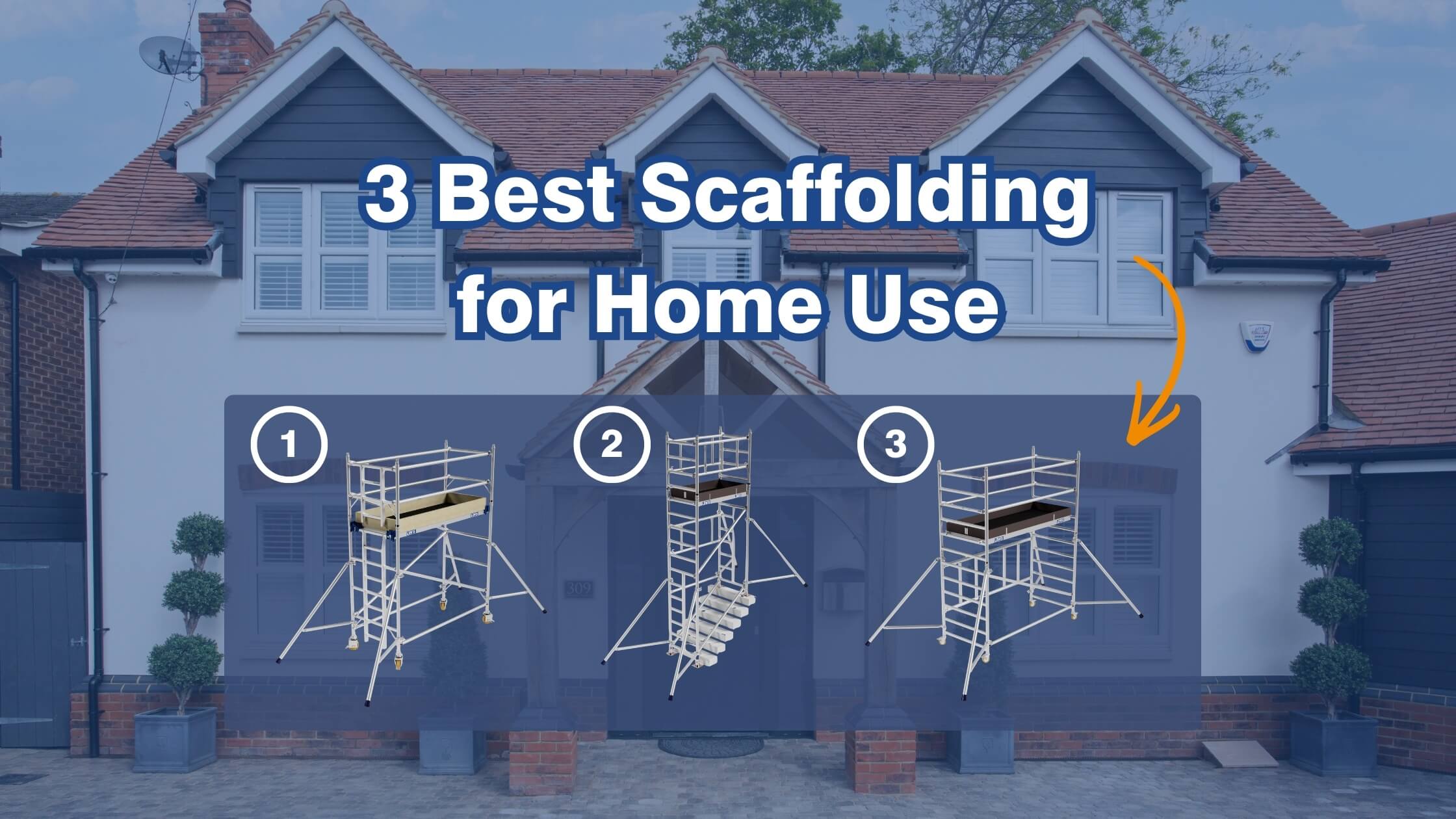
The three most common categories for domestic work are mobile tower scaffolds, folding scaffolds, and stairwell scaffolds. Each has a clear use case, and understanding the differences will stop you from buying something that ends up gathering dust in the garage.
Mobile Tower Scaffolding for Easy Manoeuvrability
Mobile tower scaffolds sit on lockable castors, so you can wheel them along a wall face without dismantling anything. That’s a genuine time-saver if you’re doing repetitive work across a long elevation: rendering, cladding, or fitting fascia boards, for example. Once the castors are locked, the tower becomes a stable, fixed platform.
Most quality aluminium mobile towers can be assembled by one person in under fifteen minutes, which matters when you’re working weekends and don’t want to burn half the morning on setup. LEWIS Access manufactures a range of mobile scaffold towers in London that are designed with exactly this kind of ease in mind: their frames use a through-the-trap build method, which means you’re always standing on a guarded platform while you add the next section. That’s not a gimmick. It’s a direct response to the Work at Height Regulations 2005, which require you to minimise fall risk during assembly.
For most homeowners tackling external maintenance, a mobile tower with a platform height between 3 and 6 metres covers the vast majority of two-storey jobs. Anything taller and you’re likely better off hiring a contractor with full tube-and-fitting scaffolding.
Folding Scaffolding for Compact Storage
If storage space is tight, a folding scaffold tower is worth considering. These units collapse down to a fraction of their working size, fitting into a shed corner or the back of a van. They’re lighter than traditional frame towers and quick to set up, making them popular for one-off jobs like hanging Christmas lights or cleaning upper-floor windows.
The trade-off is working height. Most folding scaffolds top out around 3 to 4 metres at the platform, which limits you to single-storey work or low sections of a two-storey building. They also tend to have smaller platforms, so you’ve got less room for tools and materials. For quick, low-level tasks, they’re brilliant. For anything sustained or at greater height, you’ll want a proper mobile tower.
Stairwell Scaffolding for Interior Maintenance
Painting a stairwell ceiling is one of those jobs that makes people do dangerous things with ladders. Stairwell scaffold towers solve this by providing adjustable leg lengths, so you can set one side of the tower on a lower step and the other on a landing, creating a level platform over the stairs.
These units are specifically designed for interior work where the floor isn’t level. They’re compact enough to fit through standard doorways and light enough to carry upstairs in sections. If you’ve got a Victorian or Edwardian house with high ceilings and a turning staircase, a stairwell tower is the only sensible way to reach the upper walls safely. Trying to bodge it with a ladder and a plank is exactly the kind of thing the HSE warns against every year.
Key Features to Look for in Home Scaffolding
Once you know which type suits your project, you need to evaluate specific features. Not all scaffold towers are built to the same standard, and the details matter more than you might expect.
Material Choice: Aluminium vs Steel
Steel scaffold towers are strong and relatively cheap, but they’re heavy. Really heavy. Moving a steel tower around a garden or through a house is a two-person job at minimum, and the components rust if left outside. For professional construction sites with crane access and large crews, steel makes sense. For a homeowner working alone or with a partner, it rarely does.
Aluminium towers weigh roughly half as much as their steel equivalents while maintaining comparable strength. They don’t corrode, they’re easier to transport, and individual components can be carried by one person. This is why nearly every scaffold tower designed for domestic and light trade use is made from aluminium. LEWIS Access, for instance, manufactures all their towers from high-grade aluminium in their London facility, and their products are compatible with SGB Boss and Youngman Boss components: a useful detail if you already own parts from those brands.
The weight difference isn’t trivial. An aluminium frame section might weigh 8 to 12 kg, while a comparable steel section could be 18 to 25 kg. Over the course of assembling a full tower, that adds up to a significant difference in physical effort and fatigue, which itself is a safety factor.
Working Height and Reach Requirements
Working height and platform height are two different numbers, and confusing them is a common mistake. Platform height is how high the platform sits above the ground. Working height adds roughly 2 metres to that, representing how high you can comfortably reach while standing on the platform. So a tower with a 4-metre platform height gives you a working height of about 6 metres.
Measure the highest point you need to reach before you buy anything. For most domestic exterior work on a standard two-storey house, you’re looking at a working height of 6 to 8 metres. For interior work, 3 to 5 metres usually covers it. Buying a tower that’s taller than you need isn’t just a waste of money: taller towers require more stabilisation, more assembly time, and more care during use.
Load Capacity and Platform Dimensions
Every scaffold tower has a rated load capacity, typically expressed in kilograms. This figure includes everything on the platform: your body weight, tools, paint tins, tiles, mortar buckets, the lot. A typical domestic-grade tower supports 150kg and is generally not enough when you’re considering heavy materials and two people. You’d want to consider an industrial-type tower with up to 275 kg.
Platform size matters for comfort and productivity. A platform that’s 600mm wide and 1.8 metres long gives you room to move, set down tools, and work without feeling cramped. Narrower platforms save space but make longer jobs tiring and increase the temptation to overreach, which is a leading cause of scaffold falls. Pushing two 600mm platforms together creates a 1.2m-wide tower, known as a double-width tower.
Top-Rated Scaffolding Brands and Models for Homeowners
The UK market has a handful of established brands that consistently produce reliable scaffold towers for domestic and light trade use. Knowing who makes what helps you compare sensibly rather than getting lost in a sea of near-identical product listings.
LEWIS Access stands out as a family-owned manufacturer based in London, with over 3,000 five-star reviews and their own fleet of HGVs for UK-wide delivery. Their towers are built to EN 1004 standards and use the 3T (through-the-trap) method for safe assembly. Because they manufacture directly, you’re not paying a middleman markup, and their customer support comes from people who actually build the products. Their compatibility with SGB Boss and Youngman Boss systems is a practical advantage if you’re expanding an existing kit or replacing worn components.
SGB Boss, now part of a larger group, has been a recognised name in scaffolding for decades. Their towers are well-engineered and widely available, though pricing tends to sit at the higher end because of brand recognition and distribution costs. Youngman Boss offers a similar pedigree with a range that covers everything from basic DIY towers to professional-grade units.
For homeowners buying their first tower, the key comparison points are: compliance with EN 1004 (the European standard for mobile access towers), the build method (3T is safest), material quality, and after-sales support. Price matters, of course, but a cheap tower that doesn’t meet safety standards is no bargain at all. Check that any tower you’re considering has been independently tested and comes with clear assembly instructions. If the listing doesn’t mention EN 1004, walk away.
Look for real user reviews rather than relying on manufacturer claims alone. Pay attention to comments about ease of assembly, stability in wind, and how well the locking mechanisms hold up after repeated use. These practical details tell you more than any spec sheet.
Safety Essentials for Working at Height
The Work at Height Regulations 2005 apply to everyone, including homeowners doing their own maintenance. You have a legal duty to take reasonable precautions, and morally, you owe it to yourself and your family to come down from every job in one piece. Falls from height remain one of the most common causes of serious injury in the UK, and a significant proportion happen during domestic work.
Stabilisers and Outriggers for Added Balance
Any scaffold tower used outdoors should have stabilisers or outriggers fitted. These are the arms that extend outward from the base of the tower, widening its footprint and preventing it from tipping. Most manufacturers include them as standard with towers above a certain height, but check before you buy.
The general rule is that a freestanding tower (without stabilisers) should have a base-to-height ratio of at least 1:3.5 for indoor use. Outdoors, where wind loading is a factor, stabilisers become essential at lower heights. If you’re working above 4 metres outside, fit them regardless of what the minimum requirements say. Wind can gust unpredictably, and a tower that felt rock-solid at ground level behaves differently once you’re on the platform with a sheet of plywood.
Non-Slip Platforms and Guardrails
Your platform should have a non-slip surface: either a textured aluminium deck or a plywood board with grip coating. In wet conditions, a smooth platform becomes genuinely dangerous. Check that the platform locks securely into the frame and can’t shift or lift during use.
Guardrails are not optional. A proper scaffold tower has guardrails on all four sides of the platform at a height of at least 950mm, with a mid-rail and a toe board to prevent tools rolling off the edge. If a tower doesn’t come with full guardrails, it doesn’t meet EN 1004 and shouldn’t be used for any work at height. Toe boards might seem like a minor detail until a dropped hammer hits someone standing below.
Levelling Mechanisms for Uneven Ground
Domestic ground is rarely perfectly flat. Driveways slope, lawns undulate, and patio slabs settle unevenly over time. Adjustable leg jacks allow you to level the tower on imperfect surfaces by extending individual legs to compensate for the gradient.
Always use a spirit level to check the tower before climbing. Even a small lean becomes amplified at height, and an unlevel tower puts uneven stress on the frame joints. If the ground is soft (grass, soil, gravel), use base plates or scaffold boards under the castors to spread the load and prevent sinking. Never stack bricks or blocks under a tower leg: they can shift or crumble without warning.
Assembling and Maintaining Your Home Scaffold Tower
Assembly is where most accidents happen, so take it seriously. Read the manufacturer’s instructions completely before you start. Every tower has a specific build sequence, and skipping steps or improvising creates risk.
The 3T method is the safest approach for assembling a mobile scaffold tower. You climb through a trapdoor in each platform to add the next frame section above you, meaning you’re always standing on a guarded platform rather than climbing the outside of the tower like a ladder. LEWIS Access towers are designed around this principle, and it’s one of the reasons the method is now considered industry best practice.
A sensible assembly sequence looks like this:
- Lay out all components and check nothing is missing or damaged.
- Assemble the base frame on level ground with castors locked.
- Fit the first platform and guardrails.
- Climb through the trap to add the next frame section.
- Repeat until you reach the desired platform height.
- Fit stabilisers or outriggers before use.
- Do a final check: level, locks engaged, guardrails secure, platform seated properly.
After each use, clean the components and inspect them for damage. Aluminium doesn’t rust, but joints can wear, locking pins can bend, and platforms can crack if they’ve been overloaded or dropped. Store the tower somewhere dry and off the ground if possible. A quick inspection before each use takes five minutes and could prevent a serious incident.
Replace any component that shows signs of fatigue, deformation, or corrosion at connection points. Scaffold towers are engineered as systems: one weak part compromises the whole structure.
Cost Considerations: Buying vs Hiring Scaffolding
Hiring a scaffold tower makes sense if you need it once for a specific job. Weekly hire rates for a basic aluminium tower typically run between £60 and £150 depending on height and your location. For a weekend painting project, that’s reasonable.
But here’s where the maths changes. If you’re doing two or three jobs a year, the hire costs stack up quickly. A decent aluminium tower suitable for domestic use costs between £400 and £1,200 to buy outright, depending on height and specification. At two hires per year averaging £100 each, the tower pays for itself within two to three years. After that, every use is essentially free.
Buying also gives you the convenience of having the tower available whenever you need it. No booking, no collection trips, no pressure to finish before the hire period ends. If you spot a cracked render on a Sunday morning, you can have the tower up and the repair done by lunchtime.
There are other factors to weigh:
- Hire towers may have been used hard by previous customers, with worn components and missing parts.
- Owning your tower means you know its history and condition.
- Delivery costs for hire can add £30 to £80 each way, eating into the apparent savings.
- If you buy from a manufacturer like LEWIS Access, you get direct support and access to replacement parts without going through a hire company.
For homeowners who plan to maintain their property over the long term, buying a quality scaffold tower is one of those investments that keeps paying back. It’s the kind of tool that, once you own it, you wonder how you ever managed without.
Making Your Decision: What’s the best scaffolding for home use for you?
Choosing the right scaffolding for home projects comes down to three things: the type of work you’re doing, the heights you need to reach, and how often you’ll use it. Match those answers to the right tower type, prioritise safety features like guardrails and stabilisers, and don’t cut corners on quality.
An aluminium mobile tower from a reputable manufacturer covers the vast majority of domestic maintenance tasks safely and efficiently. It’s lighter than steel, won’t corrode, and can be assembled by one person following the 3T method. If you’re serious about maintaining your home properly, and safely, it’s one of the smartest purchases you’ll make.
Take a look at the LEWIS Access range to find a tower that fits your specific needs. Their team can advise on the right height, configuration, and accessories for your project, and with UK-wide delivery on their own vehicles, getting started is straightforward.