



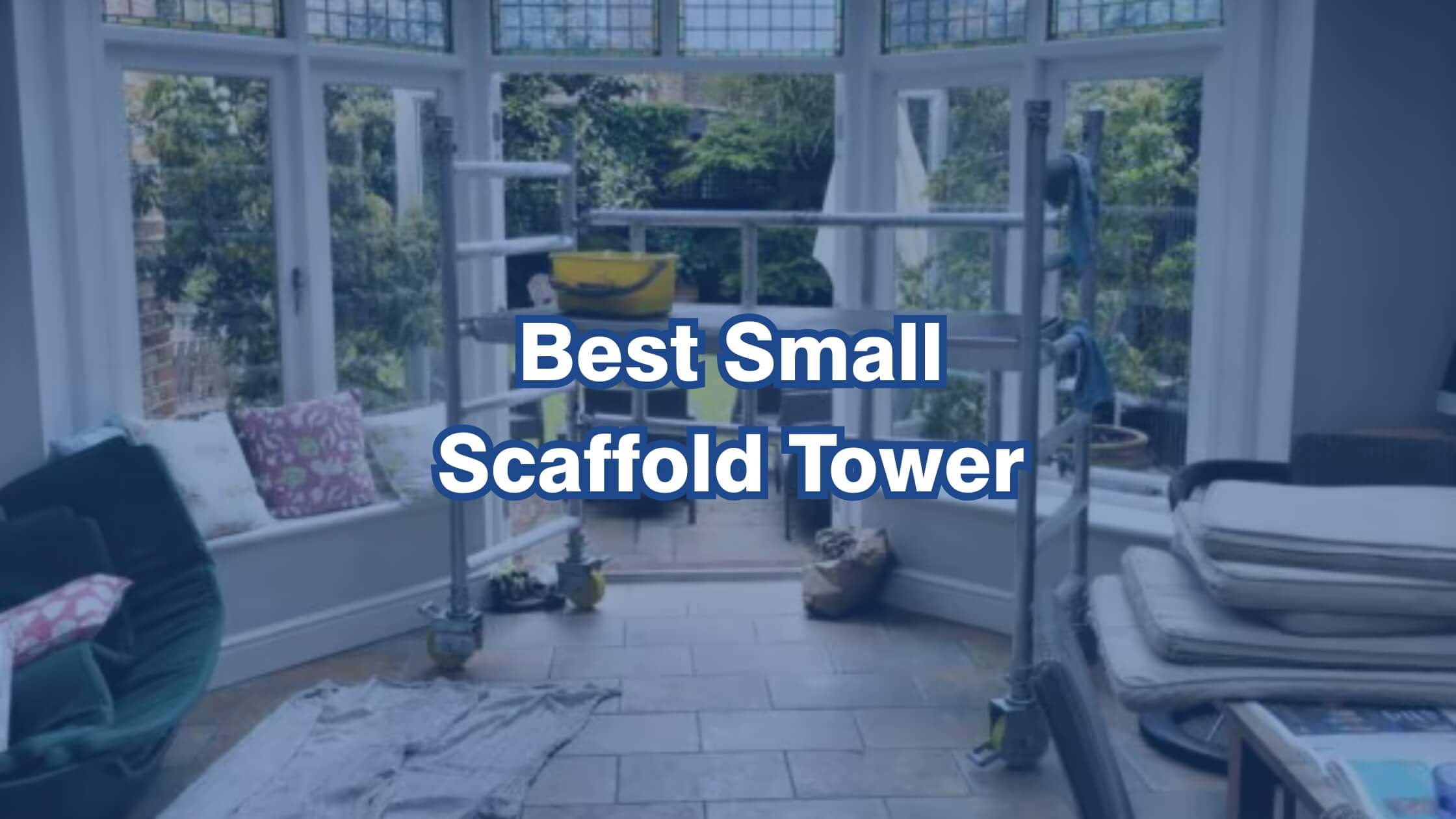
Working at height doesn’t always mean scaling a five-metre platform on a sprawling construction site. More often than not, tradespeople and maintenance teams need reliable access for jobs that sit just out of arm’s reach: replacing a light fitting in a corridor, painting a stairwell, repointing brickwork above a doorway, or servicing HVAC units in a plant room with barely enough space to swing a cat. For these jobs, a full-size tower is overkill, and a stepladder is an accident waiting to happen. What you actually need is a compact scaffold tower that’s safe, stable, and genuinely practical for the space you’re working in.
Finding the best small scaffold tower means balancing portability against platform size, weight capacity against ease of assembly, and cost against build quality. Get it right and you’ve got a piece of kit that pays for itself within weeks. Get it wrong and you’re left with something that either doesn’t fit through the door or wobbles the moment you step onto the platform. This guide is written from decades of experience manufacturing aluminium towers right here in London, and it’s aimed squarely at the tradespeople and facilities teams who use this equipment every single day.
Benefits of Choosing a Compact Scaffold Tower
A compact tower isn’t simply a smaller version of a standard one. It’s a purpose-built solution for environments where space, access, and speed all matter. The benefits go well beyond just fitting through a narrower doorway.
Ease of Manoeuvrability in Tight Spaces
Picture a typical maintenance job inside a commercial building. You’ve got corridors barely 1.2 metres wide, doorways with tight clearances, and rooms packed with furniture or machinery. Trying to manoeuvre a full-width tower through these spaces wastes time and risks damage to walls, door frames, and the tower itself.
A compact tower with a narrow footprint, say 0.7 metres wide, changes the equation entirely. You can wheel it through standard single doorways, position it in tight hallways, and reposition it multiple times throughout the day without breaking a sweat. For maintenance teams covering large buildings, that manoeuvrability directly translates into more jobs completed per shift.
Castors with proper locking mechanisms make a real difference here. You want wheels that roll smoothly on hard floors but lock firmly once you’re in position. Cheap castors that stick or slip are a false economy.
Simplified Transport and Storage Solutions
One of the biggest practical advantages of a smaller tower is logistics. A compact aluminium tower can typically break down into components that fit inside a medium van or even a large estate car. Compare that to a full-size tower that demands a long-wheelbase vehicle or a trailer.
Storage matters too. If you’re a sole trader working from a garage, or a facilities team with a cramped storeroom, a tower that packs down to a manageable footprint is worth its weight in gold. LEWIS Access towers, for instance, are designed with transport in mind: the frames nest together, and the platforms stack flat. That’s a design consideration born from actually talking to the people who load and unload this gear every morning.
Speed of Assembly for Solo Trade Projects
Here’s the thing about working alone on site: you can’t afford equipment that needs two people to put together. A well-designed compact tower should go from van to working height in under ten minutes, single-handed.
The key is an advance guard rail system that lets you build from inside the tower, fitting guard rails before you step up to the next level. This isn’t just about convenience; it’s a safety requirement under the Work at Height Regulations 2005. If your tower forces you to stand on an unprotected platform while fitting rails, it’s not compliant for professional use.
Solo tradespeople should also look for towers with intuitive component labelling and minimal unique parts. The fewer different frame types you need to remember, the faster the build and the lower the chance of assembly errors.
Key Features to Look for in Small Access Towers
Not all compact towers are created equal. The difference between a good one and a poor one often comes down to three things: material, stability design, and platform specification.
Aluminium vs Steel Construction
This one’s straightforward for most applications. Aluminium wins. It’s roughly a third of the weight of steel, it doesn’t rust, and for a small tower that gets moved frequently, that weight saving is enormous. A compact aluminium tower might weigh 40-60 kg in total, while a comparable steel unit could hit 100 kg or more.
Steel towers still have their place on long-term outdoor sites where they’ll sit in one position for weeks, but for the mobile tradesperson or maintenance team, aluminium is the only sensible choice. Look for towers made from aerospace-grade aluminium alloy, typically 6082-T6, which offers an excellent strength-to-weight ratio. This is the grade LEWIS Access uses across their range, and it’s the same specification you’ll find in quality SGB Boss and Youngman Boss compatible components.
The weld quality matters just as much as the material. Inspect the joints on any tower you’re considering. Clean, consistent TIG welds indicate proper manufacturing. Rough, uneven welds suggest corners have been cut.
Stability and Outrigger Requirements
A smaller footprint naturally means a narrower base, and that raises questions about stability. The EN 1004-1 standard sets maximum height-to-base ratios: 3.5:1 for indoor use and 3:1 for outdoor use. So a tower with a 0.7 x 1.3 metre base can safely reach around 4.5 metres indoors without outriggers, depending on the specific design.
Beyond those ratios, or in any outdoor application, you’ll need outriggers (also called stabilisers). Good outriggers should be quick to fit, adjustable for uneven ground, and sturdy enough to actually do their job. Flimsy clip-on stabilisers that flex under load are worse than useless because they give a false sense of security.
For internal work on flat, level floors, many compact towers perform perfectly within their rated height without outriggers. But always check the manufacturer’s guidance for your specific model and configuration. Don’t guess.
Platform Dimensions and Weight Capacity
The platform is where you stand, where your tools sit, and where your materials rest. Too small and you’re constantly reaching, stretching, and putting yourself off balance. For a compact tower, a platform around 0.6 x 1.3 metres is a practical minimum for most trade tasks.
Weight capacity is rated for the entire tower, not just the platform. A typical small tower should handle at least 150 kg on the platform, which covers one person plus tools and materials. Some professional-grade towers are rated to 275 kg, allowing two people to work simultaneously, though on a compact platform that’s a tight squeeze.
Check whether the platform has a trapdoor hatch. This is essential for safe access using the 3T method (more on that shortly). A platform without a hatch forces you to climb around the outside of the tower, which is both dangerous and non-compliant with best practice.
Top-Rated Small Scaffold Towers on the UK Market
The UK market has dozens of options, but three categories cover the majority of real-world needs.
Best for Domestic DIY and Maintenance
For homeowners tackling occasional jobs like painting, gutter cleaning, or hanging Christmas lights, a tower in the 3-4 metre platform height range is usually sufficient. You don’t need industrial-grade equipment, but you absolutely still need something that meets safety standards.
Look for a tower kit that includes everything: frames, braces, platforms, guard rails, outriggers, and castors. Buying components piecemeal often leads to compatibility headaches. A complete kit from a reputable manufacturer will have been tested as a system, not just as individual parts.
Budget around £300-£600 for a decent domestic tower. Anything significantly cheaper is likely cutting corners on material thickness, weld quality, or stability design. Your safety isn’t worth a £100 saving.
Best Professional Compact Towers for Tradespeople
Professional users need towers that can handle daily use, frequent assembly and disassembly, and the occasional knock. This is where build quality really separates the wheat from the chaff.
LEWIS Scaffold Towers are manufactured in London and designed specifically for this kind of repeated professional use. The frames use heavy-duty aluminium with reinforced connection points, and the locking mechanisms are built to withstand thousands of cycles without developing play or looseness. With over 3,000 five-star reviews from working tradespeople, the feedback speaks for itself.
For professionals, compatibility with other major systems like SGB Boss is a genuine advantage. It means you can integrate components, source replacements easily, and build hybrid configurations for unusual jobs. LEWIS Access towers offer this cross-compatibility, which is a practical benefit that saves money over the long term.
A professional compact tower in the 4-6 metre platform height range, with a full set of outriggers and spare platforms, typically costs £500-£1,200 depending on specification.
Best Narrow Width Towers for Internal Hallways
Hallway and corridor work demands the narrowest possible tower. A 0.6-metre wide tower will fit through most internal doorways and work comfortably in corridors as narrow as 0.8 metres once assembled.
These ultra-narrow towers do require extra attention to stability. The reduced base width lowers the safe freestanding height, so outriggers become essential at lower working heights than you might expect. Always check the manufacturer’s height chart for the narrow configuration.
For stairwell work, some compact towers can be configured with adjustable leg lengths to accommodate the change in floor level. This is a specialist requirement, and not every tower supports it. If stairwell access is a regular part of your work, make sure the tower you choose has this capability built in rather than relying on improvised solutions.
Safety Standards and Legal Compliance
Safety isn’t optional. It’s the entire point of using a tower instead of a ladder. Understanding the relevant standards protects you, your workers, and your business.
Understanding EN 1004-1 Regulations
EN 1004-1 is the European standard for mobile access towers, and it remains the benchmark in the UK in 2026. It covers design, structural requirements, and performance testing. Any tower you buy for professional use should be designed and tested to this standard.
The standard specifies requirements for platform dimensions, guard rail heights (minimum 950 mm), toe board heights, bracing configurations, and maximum loading. It also defines the height-to-base ratios mentioned earlier. A tower that claims compliance but doesn’t meet these specific requirements isn’t actually compliant, regardless of what the marketing says.
Look for a declaration of conformity from the manufacturer, not just a vague claim on the product listing. Reputable manufacturers like LEWIS Access provide full technical documentation and can demonstrate testing to EN 1004-1 requirements.
The Importance of PASMA Certification
PASMA, the Prefabricated Access Manufacturers’ and Suppliers’ Association, runs the industry-recognised training programme for tower users in the UK. If you’re using a mobile tower at work, your employer has a legal duty under the Work at Height Regulations to ensure you’re competent. Completing a PASMA training course is the standard way to demonstrate that competence.
The course covers tower selection, inspection, assembly, use, and dismantling. It’s a one-day programme that costs around £200-£300 per person. For any business that regularly works at height, it’s a non-negotiable investment.
PASMA also maintains a list of approved tower manufacturers and hire companies. Choosing equipment from a PASMA member gives you confidence that the manufacturer takes safety seriously and that the product has been independently assessed.
Step-by-Step Guide to Safe Erection
Putting a tower up correctly takes ten minutes. Putting one up incorrectly can take a lifetime to regret. Here’s how to do it properly.
Pre-Use Inspection Checklist
Before you even start assembly, inspect every component. This takes five minutes and could save your life.
- Check all frames for cracks, dents, or bent sections
- Inspect locking clips and spring buttons for proper function
- Examine platforms for damage, warping, or missing trapdoor hinges
- Verify that castors spin freely and brakes engage firmly
- Confirm that all braces are straight and undamaged
- Look for corrosion at weld points, particularly if the tower has been stored outdoors
If any component fails inspection, don’t use it. Replace it. A single damaged brace can compromise the entire structure.
The 3T Method (Through the Trapdoor)
The 3T method is the PASMA-approved technique for safely climbing and building a mobile tower. The name refers to the sequence: you always access the platform through the trapdoor, never by climbing around the outside.
- Assemble the base section on locked castors, on firm level ground
- Fit the first platform at the lowest level with its trapdoor hatch
- Climb the internal ladder to the platform and pass through the trapdoor
- Standing on the platform, fit the advance guard rails for the next level above you
- Add the next frame sections and braces while protected by guard rails
- Fit the next platform and repeat the process until you reach working height
- Secure all toe boards and ensure the final guard rails are locked in place
The critical principle is that you’re always protected by guard rails before stepping onto any platform level. You never stand on an unprotected platform to fit rails above you. This sequence eliminates the most common cause of tower-related falls.
Maximising the Lifespan of Your Access Equipment
A quality aluminium scaffold tower should last 15-20 years with proper care. The aluminium itself won’t corrode under normal conditions, but the moving parts, locking mechanisms, castors, and hinge points need attention.
Clean your tower after each use, particularly if you’ve been working near plaster dust, cement, or paint. Grit in the locking mechanisms causes premature wear and can eventually prevent components from securing properly. A quick wipe-down and a blast of compressed air through the spring buttons takes two minutes.
Store your tower indoors if possible. While aluminium handles moisture well, steel springs and pins inside the locking mechanisms can rust if left in damp conditions for extended periods. If indoor storage isn’t an option, at least keep the components off the ground and covered.
Replace worn castors and damaged clips promptly. These are consumable items, and running them past their useful life puts stress on the frame connections. LEWIS Access supplies replacement parts directly and delivers across the UK via their own fleet of HGVs, so getting hold of what you need is straightforward.
Keep a maintenance log for each tower. Record inspections, component replacements, and any incidents. This isn’t just good practice; it’s evidence of compliance if you ever face a health and safety inspection. A well-maintained tower from a quality manufacturer is an investment that pays dividends year after year.
Choosing the right compact tower comes down to understanding your specific working environment, selecting equipment that meets EN 1004-1 standards, and committing to proper training and maintenance. Whether you’re a sole trader fitting kitchens or a facilities team managing a hospital campus, the right small scaffold tower makes working at height safer, faster, and more productive. Take the time to choose well, maintain it properly, and it’ll serve you reliably for years to come.