



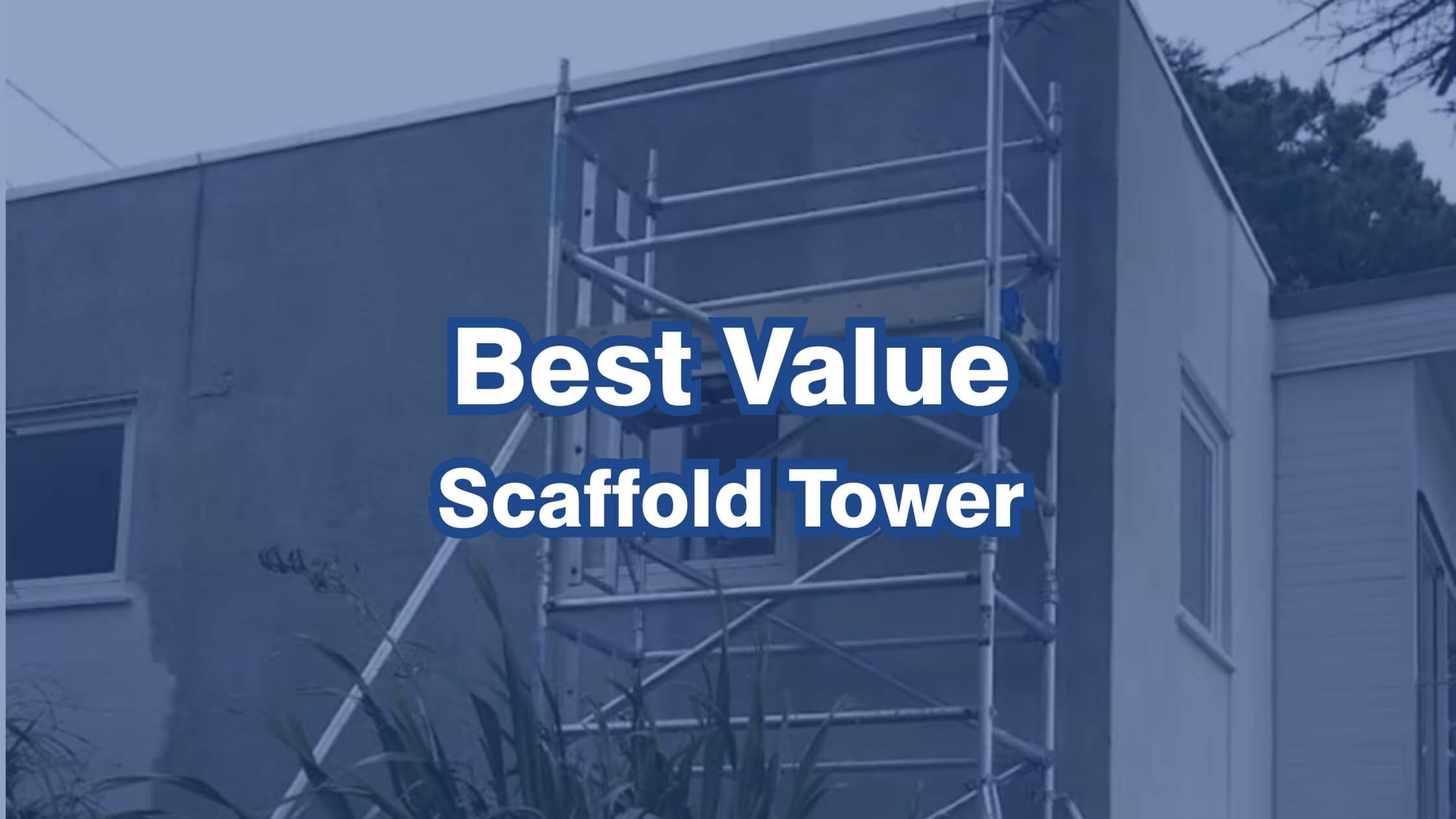
Buying a scaffold tower is one of those decisions that can either save you thousands over the years or drain your budget faster than a leaky roof gutter.
The difference between a good purchase and a regrettable one rarely comes down to the sticker price alone.
What you actually want is the best value scaffold tower: one that keeps you safe, lasts for years, and doesn’t cost a fortune to maintain or replace.
Whether you’re a sole trader decorator or part of a large maintenance team, the right tower should feel like an investment, not an expense.
Here’s what matters most when you’re weighing up your options, based on decades of experience manufacturing aluminium towers right here in London.
Defining Value in Scaffold Towers
Value is a word that gets thrown around loosely, but for tradespeople and maintenance teams, it means something very specific.
A scaffold tower that offers genuine value does three things well: it keeps you safe at height, it holds up under repeated use, and it doesn’t quietly become obsolete because it fails to meet current standards.
The cheapest tower on the market might look appealing on a Tuesday morning, but if it’s buckled by Friday, you’ve wasted your money and risked your neck.
True value also accounts for versatility. A tower that only works on flat, indoor surfaces isn’t much use to a team handling external maintenance, stairwell access, and warehouse work in the same week. The best purchase is one that adapts to your real working life, not just the ideal scenario on the product page.
Balancing Initial Cost and Long-Term Durability
There’s always a temptation to buy the cheapest option available. But scaffold towers aren’t disposable tools. A well-made aluminium tower should last 15 to 20 years with proper care, which means the upfront cost is spread across thousands of uses. Suddenly, that extra £200 or £300 doesn’t seem so painful.
Look at the gauge of the aluminium tubing. Thinner walls might shave a few pounds off the price, but they dent more easily and fatigue faster under load. LEWIS Access towers, for instance, are manufactured from high-grade aluminium extrusions in London, and the difference in rigidity is something you can feel the moment you climb the first rung. Cheap imports often use softer alloys that flex noticeably at height, which isn’t just uncomfortable: it’s a warning sign.
Consider replacement part availability too. If a brace snaps on a no-name tower, you might wait weeks for a compatible part from overseas. With established UK manufacturers, spares are typically available next-day. That’s real value when you’ve got a job to finish.
Safety Standards and EN1004 Compliance
If a scaffold tower doesn’t comply with EN 1004, walk away. Full stop. This European standard (still adopted in the UK) covers design, structural integrity, and safe use of mobile access towers. It specifies load ratings, platform dimensions, guardrail heights, and bracing requirements. A tower that meets EN 1004 has been tested and verified to keep you safe at the working heights it’s rated for.
The Working at Height Regulations 2005 require employers to ensure that any equipment used for working at height is suitable, stable, and strong enough for the job. Using a non-compliant tower isn’t just risky: it’s a legal liability. If an inspector visits your site and your tower doesn’t meet the standard, you’re looking at enforcement action, potential fines, and the kind of paperwork nobody wants.
Every LEWIS scaffold tower is manufactured to EN 1004 and comes with clear documentation to prove it. That compliance isn’t a marketing badge: it’s the baseline for any tower that deserves your consideration. If a supplier can’t provide EN 1004 certification, treat that as an immediate red flag.
Top-Rated Material Choices for Budget and Performance
The material your tower is made from affects everything: weight, corrosion resistance, load capacity, and how easy it is to transport. Most tradespeople will default to aluminium, and for good reason, but there are situations where steel or fibreglass makes more sense.
Aluminium Towers: Lightweight and Rust-Proof
Aluminium is the standard for mobile scaffold towers, and it earns that position honestly. A typical aluminium tower weighs 30 to 50 percent less than its steel equivalent, which matters enormously when you’re loading and unloading from a van multiple times a day. Your back will thank you.
Aluminium doesn’t rust. It forms a natural oxide layer that protects against corrosion, so towers stored in damp conditions or used outdoors won’t deteriorate the way steel does. This is a significant factor for maintenance teams working in coastal areas or wet climates.
The strength-to-weight ratio of aluminium is excellent. Modern extrusion techniques allow manufacturers to create complex profiles that are both lighter and stronger than simple round tubes. LEWIS Access uses proprietary extrusion designs that interlock precisely, reducing play in the joints and creating a more rigid structure overall. If you’re comparing towers side by side, pay attention to how the frames connect: sloppy joints mean wobble at height.
Steel Options for Heavy-Duty Industrial Use
Steel towers still have their place, particularly in heavy industrial settings where extreme loads are involved. If you’re supporting bricklayers with full hods of materials, or rigging heavy equipment at height, steel’s higher load capacity can be the deciding factor.
The trade-off is weight and maintenance. Steel towers are significantly heavier, often requiring two or three people to erect safely. They also need regular inspection for rust, especially at joints and welds where moisture collects. Painting or galvanising helps, but it adds ongoing maintenance costs that chip away at any initial savings.
For most trade and maintenance applications, aluminium outperforms steel on value. But if your work involves sustained heavy loads in a fixed location, steel remains a legitimate choice.
Fibreglass Solutions for Electrical Work
Fibreglass (or GRP) towers are specialist kit. Their primary advantage is that they’re non-conductive, making them essential for electrical work near live circuits or overhead power lines. If your team works on electrical installations, substations, or telecoms infrastructure, a fibreglass tower isn’t optional: it’s a safety requirement.
These towers cost more than aluminium equivalents and they’re heavier. They also require careful handling because fibreglass can crack or delaminate if struck hard, unlike aluminium which tends to dent rather than fracture. Storage matters too: prolonged UV exposure degrades fibreglass over time, so keep them covered or indoors when not in use.
For the majority of tradespeople, fibreglass is overkill. But for those who need it, no other material will do.
Key Features to Look for in a Value Tower
Beyond materials and compliance, the features built into a scaffold tower determine how quickly you can set it up, how safe it is in use, and how much frustration it causes on a Monday morning when you’re running late.
Stabilisers and Outriggers for Increased Safety
Stabilisers and outriggers widen the effective base of your tower, preventing it from tipping under lateral loads or wind pressure. For any tower above about 2.5 metres platform height used outdoors, stabilisers aren’t optional: they’re a requirement under safe use guidelines.
Good stabilisers should be:
- Quick to attach without tools
- Adjustable for uneven ground
- Strong enough to resist significant lateral force
- Compatible across your tower range so you don’t need different sets for different configurations
Some budget towers come without stabilisers included, which makes the headline price look attractive but means you’re spending extra before you can safely use the tower outdoors. Always check what’s included in the box. A tower that arrives complete with stabilisers, outriggers, and toe boards represents far better value than one that needs £150 of accessories before it’s site-ready.
Tool-Free Assembly and Quick-Release Braces
Time is money. Every minute spent wrestling with bolts, pins, and spanners is a minute you’re not earning. Modern scaffold towers should feature tool-free assembly systems: quick-release braces, snap-lock connections, and gravity-lock castors that click into place without adjustment.
LEWIS Access towers use a quick-release brace system that’s compatible with SGB Boss and Youngman Boss components. This interchangeability is a genuine advantage for teams that already own towers from other manufacturers. You’re not locked into a single ecosystem, and you can mix and match components as your fleet grows.
Look for towers where a single person can safely erect the structure using the advance guardrail method (AGR). This 3T (Through The Trap) system means the person building the tower is always protected by guardrails, even during assembly. If a tower requires you to stand on an unprotected platform while fitting the next level, it’s outdated and unsafe.
Platform Height vs Working Height Explained
This catches people out constantly. Platform height is the height of the standing surface. Working height adds roughly 1.7 to 2 metres on top of that, representing the maximum height a person of average stature can comfortably reach while standing on the platform.
So a tower with a 4-metre platform height gives you approximately a 6-metre working height. When you’re specifying a tower for a job, always think about what you need to reach, then work backwards to determine the platform height required. Ordering a tower based on working height alone can leave you with a structure that’s taller (and more expensive) than necessary.
Most manufacturers list both figures, but if you only see one, ask which it is before buying. Getting this wrong means either returning the tower or, worse, working unsafely by over-reaching from a platform that’s too low.
Choosing the Right Size for Your Project
Scaffold towers come in various widths and configurations, and picking the right one for your specific work makes a real difference to both safety and productivity.
Narrow Width Towers for Internal Decorating
Single-width towers (typically around 0.7 metres wide) are designed for indoor work where space is tight. Think hallways, stairwells, corridors, and rooms where furniture can’t be fully cleared. They fit through standard doorways without dismantling, which saves enormous amounts of time on residential decorating jobs.
The trade-off is stability. Narrow towers have a smaller base, so their maximum safe height is lower than double-width equivalents. Most narrow towers top out at around 4 to 6 metres platform height, depending on whether stabilisers are fitted. For ceiling work in standard-height rooms, that’s more than enough.
If you’re a decorator or painter doing primarily interior work, a narrow tower is likely your most-used piece of access equipment. It’s worth buying a good one rather than making do with a cheap model that wobbles every time you load a roller.
Double Width Towers for External Maintenance
Double-width towers (around 1.35 to 1.45 metres wide) give you a larger platform area and a more stable base. They’re the standard choice for external work: fascia replacement, gutter cleaning, window installation, rendering, and general building maintenance.
The wider platform means you can have tools and materials beside you while working, rather than constantly climbing up and down to fetch things. On a full day’s work, this efficiency adds up significantly. A good double-width tower with a decent platform area genuinely changes how productively you can work at height.
For maintenance teams handling a variety of external jobs, a modular double-width tower that can be configured to different heights offers the best flexibility. You buy one system and adjust it to suit each job, rather than owning multiple fixed-height towers.
Stairway Scaffold Towers for Difficult Access
Stairway towers are the answer to one of the most awkward problems in access equipment: working safely over stairs, slopes, or split-level surfaces. They use independently adjustable legs to create a level platform even when the ground beneath isn’t flat.
These are specialist pieces of kit and they cost more than standard towers. But if you regularly work in stairwells, on sloped driveways, or over steps, a stairway tower eliminates the bodged solutions that cause accidents: ladders balanced on stairs, planks wedged between steps, or standard towers with legs extended unevenly.
The Working at Height Regulations are clear that improvised solutions are not acceptable when proper equipment exists. A stairway tower is proper equipment. If your work takes you into these environments regularly, it’s a necessary investment, not a luxury.
Maintaining Your Investment for Maximum Lifespan
A scaffold tower that’s looked after properly will serve you for decades. One that’s neglected will become unsafe far sooner than it should, turning what seemed like a bargain into a costly mistake.
Regular Inspection and Component Checks
Before every use, give your tower a visual inspection. Look for bent or dented frames, cracked welds, worn locking mechanisms, and damaged castors. Any component that’s compromised should be replaced immediately: not taped, not bent back into shape, replaced.
A more thorough inspection should happen at least every six months, or more frequently if the tower sees heavy use. Check:
- All locking pins and clips for wear
- Castor wheels for smooth operation and effective braking
- Platform boards for cracks, warping, or delamination
- Braces for straightness and secure locking
- Stabiliser clamps for grip strength
Keep a simple inspection log. It takes five minutes and creates a paper trail that protects you if there’s ever an incident or HSE visit. LEWIS Access provides inspection guidance with every tower, and replacement components are available for next-day delivery across the UK via their own HGV fleet: no waiting on third-party couriers.
Safe Storage and Transportation Tips
Aluminium doesn’t rust, but that doesn’t mean you can leave your tower in a heap behind the workshop. Store components vertically where possible to prevent bowing. Keep them off damp ground and away from chemicals that could cause pitting or discolouration.
During transport, secure all components properly. Loose frames sliding around in a van get scratched and dented, and damaged tubes compromise the tower’s structural integrity. Use racking or tie-down straps to keep everything in place. It sounds obvious, but the number of towers we see damaged by poor transit is remarkable.
If you’re stacking platforms, place something between them to prevent surface damage. A simple blanket or sheet of cardboard does the job. These small habits extend the life of your equipment by years and keep it looking professional when you arrive on site.
Summary of Best Value Scaffold Tower Recommendations
Finding a scaffold tower that genuinely represents good value comes down to a handful of principles. Buy from a manufacturer that builds to EN 1004 and can prove it. Choose aluminium unless your specific work demands steel or fibreglass. Make sure the tower comes complete with stabilisers, toe boards, and all the safety components you need: not as expensive extras.
Prioritise tool-free assembly and compatibility with widely used systems like LEWIS and SGB Boss. This protects your investment if you expand your fleet or need replacement parts quickly. Check that the platform height matches your actual working requirements, and choose the right width for the environments you work in most often.
Look after your tower and it will look after you. Regular inspections, proper storage, and prompt replacement of worn parts keep you safe and keep your equipment working as it should. With over 3,000 five-star reviews and towers manufactured in London by a family-owned business, LEWIS Access is a solid starting point for anyone serious about getting the best value from their scaffold tower purchase. Your safety at height depends on the quality of what you’re standing on: don’t compromise on it.